Writing never stops—never fully stops—even during a period that feels like vacation. I’m drafting another novel now. Without giving away too much, I’ll tell you that it’s a young adult horror novel about Elmo Avila, the 12-year-old son of a high-ranking Marine, and Elmo’s visit to a haunted tattoo parlor that his father has blacklisted.
As a guide to the writing of this story, I’m using the 90-Day Novel, a craft book by Alan Watt. I’m violating at this moment one of the 90-Day Novel’s core rules: Don’t Talk about Your Novel While You’re Writing It.

What purpose does this writer’s omerta serve? Alan Watt says that talking about writing a novel to others encourages a writer to be result-oriented when he most needs to be process-oriented.
I agree with this. As you work on your novel—especially in your first draft—you should not be thinking about how the rest of the world will praise you when it’s finished. You shouldn’t be thinking about how you’ll leverage your published novel into a career as a sigma male podcaster. You should simply be immersing yourself in the writing process and trusting that, if you immerse yourself in the process, the product (and the podcast) will take care of itself.
Watt also seems to think of creativity as something like a pot of water that will boil faster if you keep a lid on it. Maybe this is true too.
I’ve heard similar advice in non-writing contexts. A YouTuber to whom I subscribe, Dr. Kanojia, advises his audience to keep their mouths shut about their goals. He says that talking about a goal can lead to praise from others, which is rewarding to us. When we get that reward—simply for having a goal—we lose the motivation to achieve the goal. And we become insufferable. We all know persons who bore us to death with the ambitions they’ll never achieve.
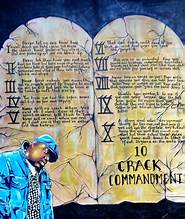
Rule number two of Biggie Smalls’s “Ten Crack Commandments” says, “Never let ‘em know your next move/Don’t you know bad boys move in silence and violence?” (Lil Wayne referenced this lyric in “6 Foot 7 Foot” by reminding us that “Real G’s move in silence like lasagna.”)
If you’re a drug dealer, this rule makes a lot of sense: you’re vulnerable to robbery and arrest if you talk too much. But writers get robbed too.
I heard a story just last year about a Marine veteran and writer whose name I won’t mention. This Marine presided over a writer’s workshop for veterans. The vets in the workshop shared their writing—that’s what you do in a writer’s workshop, after all.
Later, this workshop leader became a showrunner on a certain TV show. A previous student from that workshop saw the show. She recognized some of her stories. She sued the showrunners, and the case was settled out of court.
That’s what I heard, anyway—I’m naming no names because I couldn’t find anything about the case on the internet. I heard this story from a professor I trust, but it’s possible that the student’s complaint was groundless, that the workshop leader in question did nothing wrong. Maybe the stories were only superficially similar. But I believe this really happened, only because I know Marines. There’s a saying in the Marine Corps: “Marines don’t steal, we tactically acquire.”
Idea theft, at least among novelists, probably isn’t rampant, but it happens, and when it does, the victim often has little or no proof that she’s been wronged. Pretty good reason to keep your ideas close to your chest until you have some proof of concept.
With all the above in mind, am I telling you to never talk about your novel? Of course not.
My junior year, after I completed community college, I transferred to Lees-McRae, a tiny liberal arts school in the mountains of North Carolina. It was here that I met Matt Wimberley. Matt, a poet, was one of my first mentors as an adult writer.
I had him, first, for a technical writing class. We did our icebreakers, and I mentioned that I was working on a memoir about my time in the Marines.
“I probably shouldn’t even bring it up,” I said. “I feel kind of silly talking about it, since I may never finish.”
“No,” Matt said, “I think you ought to talk about it–I don’t think we should silence ourselves about our writing.” (Evidently, he doesn’t expect writers to behave like real G’s or Italian food.)
I was a 27-year-old veteran in a state of arrested development. I needed to hear that encouragement to talk about my writing. It made me feel as though I could really do it.
I also have the unfortunate blessing of being totally wrapped up in what people think of me. I enlisted in the Marines on my eighteenth birthday, and a big part of why I did it was because I had told other people that I would do it. For good or ill, if I had never mentioned my desire to be a Marine to anyone else, I may never have had the courage to do it. I would be a completely different person today.
Discussing your work is an individual thing–like every other aspect of a writer’s craft. If you’re lucky enough to have a partner, as I do, who is a gifted writer, you may find it useful to discuss problems in character or plot. I feel, in contrast to what Alan Watt says, that you don’t always need to keep the lid on your creativity. You just can’t let any old cook into the kitchen.
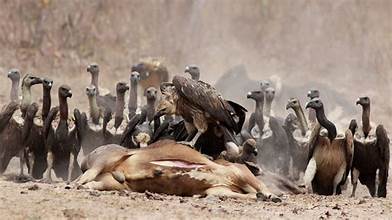
Workshops are straight-up dangerous. They’re valuable—a workshop is a stress-test for your stories. But it’s incredibly discouraging to stress-test an incomplete first draft. First drafts are notoriously riddled with flaws, and that’s okay. But what you really don’t need as a new novelist is a wake of vultures pecking at those flaws while you’re trying to move forward and finish.
In this case I agree with Alan Watt. You need to protect your ideas from criticism until you’ve finished a draft. It’s harder to give up on an idea once you’ve completed a draft of it.
I think too that the longer the work, the more time and commitment it will demand, the more you should keep quiet about the fine details. Most writers can draft a short story in a few weeks, if not a few days. Maybe it isn’t such a big deal to talk about the plot of your short story with your friends (assuming those friends aren’t Marines).
On the other hand, if you’ve frustrated yourself with inability to finish drafts, and you notice that you’ve discussed those drafts with friends beforehand, I think it’s worth experimenting. For your next draft, don’t say a work until it’s finished and revised. Godspeed, and from one vulture to another, Caw Caw.
 Nolancapps.com
Leave a comment