Trudge? Trudge? I hate the word.
Am I the only one? And am I wrong? After all, some of the first writing advice we hear is to avoid adverbs and prefer verbs that are active and vivid in themselves. Trudge, therefore, should be a fine word. It should at least be preferable to “walked laboriously,” for example. And shouldn’t a trudging character serve as a welcome change from the legion of walkers in fiction? No. No, he shouldn’t.
But why do I hate this word so much? Why do I roll my eyes every time a writer tells me “Jennifer trudged to class.” I don’t know, but I do. I read about Jennifer’s trudging, and the hate fills me. It’s only right I try to untangle my suspicion.
My first gripe is the sound of it. Trudge makes me think of fudge. It doesn’t sound like what it means. I don’t know why I feel this way—I’m fine with characters treading, and treading, to me, sounds like taking steps. Then again, maybe the unpleasant sound of trudge is appropriate for the weary walking it implies.
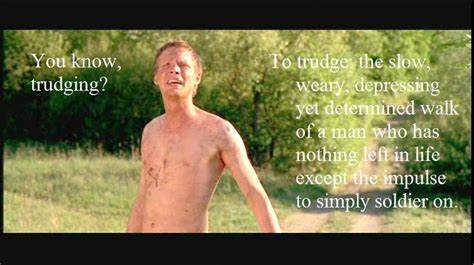
I think of the saying, “fools rush in where angels fear to tread.” That’s a phrase with music. Compare with “fools rush in where angels fear to trudge.” I’m amused by the sound, but this comparison isn’t fair; trudging and treading have different connotations. In this case, treading implies a kind of tiptoe, a deliberate stepping that is the antithesis of rushing. But I am convinced that part of the reason for my irrational hate of the word is in the sound. The word tread is fine. Judge is fine—I like the repeating “J” sounds. But trudge is an abortion of consonants.
Here’s a better, less superficial reason. Writers, I have noticed, sometimes fear using the same word too many times. They feel they must constantly vary their terms, or the reader will get bored. This is most objectionable in dialogue tags, where the novice will make their characters cry, squeak, guffaw, chortle, gasp, thunder, lisp, blubber, whisper, grunt, and ejaculate, all for fear of writing the word “said” more than once per chapter.
The same phenomenon prevents the characters of novice writers from simply walking from point a to point b. Jennifer can’t walk to class, because earlier in the chapter, she walked to the refrigerator for her leftover beef lo mein. She can’t tread to class either. Should she saunter? Amble? Limp? The novice remembers “trudge” with an ejaculation of delight. Yes. Jennifer will trudge to class, calculus tome in hand.
I’m suspicious of Jennifer and her trudging. I’m suspicious of any word I think is a reach word. A reach word, to me, is a word a writer reaches for. It’s not the word that comes naturally, it’s the product of a writer straining to avoid repeating herself. To all writers, I beg you, don’t reach! Just write. If your character commits the sin of walking more than once per chapter, forgive them and let them walk. Admit it: Jennifer, assuming she is able-bodied, is more likely to walk than to saunter, sashay, amble, prance, tiptoe, tread, mince, or plod. Stop telling us that Jennifer is trudging.
Is a reach word automatically bad? Of course not. Some writers with great ear and imagination reach for all kinds of surprising verbs and deploy them with aplomb. I’m just not one of them, and I resent the writers who are. Some writers, too, will reach for a verb when it is necessary, and only when it is necessary. These writers understand restraint. Therefore, when a verb of theirs does do something surprising, it has a lot more power to delight.
When a writer tries to make every sentence heroic, the result is either genius or purple prose. We may argue over which is which, but I submit that a young writer who tries too hard is much more likely to write purple prose than to write genius prose. If you don’t know what purple prose is, I recommend checking out this lovely dictionary of purple prose for some examples. Unfortunately for this blog post, trudge is not an entry.
 Nolancapps.com
Leave a comment